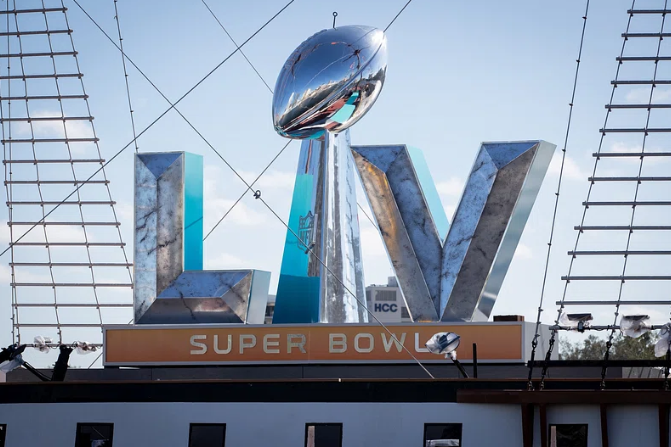
On February 8th, Puerto Rican rapper and singer Benito Antonio Mertínez Ocasio, also known as Bad Bunny, performed at the Super Bowl 60 halftime show in Santa Clara, California. The performance, entirely in Spanish, consisted of a real wedding, special guest features, stunts, and also included both cultural and political symbolism. While other Latin artists have performed previously, Bad Bunny made history by being the first to perform entirely in another language.
Announced as the halftime performer in late September by the NFL, some believe Bad Bunny was chosen not only for talent, but to help fulfill the NFL’s objective: growing the international and Latino audience. These opinions ignited as NFL commissioner Roger Goodell said he wants each team to play a game abroad every year. Marissa Solis, the NFL’s senior vice president of global brand and consumer marketing, also revealed that the Latin U.S population was identified as a “critical growth area.”
Even before Bad Bunny took the stage, political opinions heightened when Bad Bunny’s speech at the Grammys included political topics. Awarded for the Best Global Music Performance and Album of The Year, Bad Bunny used his award’s speech as an opportunity to protest against Immigration and Custom Enforcement (ICE) officers. His speech was the most explicit political moment of the ceremony, including statements like “Before I say thanks to God, I’m going to say ICE out,” and “The only thing that’s more powerful than hate is love.” His “ICE out” speech sparked political conflict as the Super Bowl neared, dividing the halftime show’s audience before it even began. Additionally, Bad Bunny addressed critics during his Saturday Night Live monologue, declaring in Spanish that if the viewers did not understand him, they “had four months to learn.”
Out of the average 128.8 million Super Bowl viewers, some thought the show excluded English speakers, while others thought it embraced the Latino culture. On February 9, the educational company Duolingo, known for its language learning app, posted on Threads that they “Saw a 35 percent increase in Spanish learners last night. Better late than never,” showing one of the many effects the halftime show created. However, others felt the show included features to directly protest against ICE, and some audiences believed the show included songs with inappropriate lyrics that did not fit the family-friendly expectations.
Overall, numerous symbols throughout the halftime show aided the assumption that his goal was to create unity. According to the media company TIME, “Bad Bunny, in just a few minutes of television, communicated all of this: the oppression, the ingenuity, the joy of his people.” Although he showed an aspiration to promote unity throughout the show, some audience reactions created controversy regarding what his initial intentions were. Whether motivated by politics, pride, or a different influence, his halftime show ultimately reshaped cultural expectations for future NFL Super Bowl performances.