The Ides of March is known as a day of misfortune. It’s the day in the ancient Roman calendar that falls on March 15th, which is the day dictator Julius Caesar was assassinated in 44 BCE. His assassination was further immortalized in Shakespeare’s tragic play Julius Caesar written in 1599.
The name of this day came from the names of old lunar phases. “Ides” is an ancient term used to note the middle of the month that typically fell on the 13th or the 15th and marked the first full moon every month.
It was once just another day on the calendar, but came to be known for the betrayal and assassination of Julius Caesar. William Shakespeare took this event and wrote about it dramatically, which made the event’s popularity grow profusely. In Julius Caesar, the Soothsayer warns Caesar to “Beware the Ides of March,” becoming the most famous words of the play, and in literature. It’s heard in pop culture, such as books, movies; although, many people who use the quote may not quite know what it truly represents. The term has come to suggest dark emotions, betrayal, eeriness, and caution. Many associate it with doom, bad luck, and or a bad omen as the Romans witnessed in 44 BCE at the time of Caesar’s assassination.
“I have to think that the date has been sensationalized through events in history such as Shakespeare’s play. Things have happened on that day throughout history that presents bad luck,” offered Mr. Hunter, Health and Phys Ed. teacher.
Julius Caesar was assassinated by a group of nobles. This occurred during a time when Caesar was in the middle of social and political reforms. But Hunter is not wrong: There have been many other instances of tragedy striking on the Ides of March, such as a 1889 cyclone that destroyed six warships in Apia Harbor, killing over 200 soldiers. In 1917, the Russian Czar abdicated, ending a 300-year dynasty that led to Communism, and in 1941, a severe blizzard hit North Dakota, killing 150 people. More recently, in 2008, a 300 ft crane broke in Manhattan and killed 7 people also on The Ides.
So maybe it was Julius Caesar’s death that initiated the bad omen that The Ides of March has become, or maybe it was the dramatization by William Shakespeare that enhanced the bad luck? 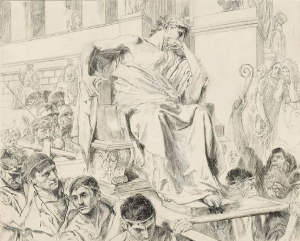
“William Shakespeare’s play. I think the play created the bad luck, but now we all search for it,” said Mr Graffeo, a Social Studies teacher here at OPHS. “Similar to Friday the 13th, we know that it’s known for bad luck, as we search for evidence that supports it. And in that sense, the play made us search for crucial things that agree with the idea of bad luck,” continued Graffeo.
We may never know if Julius Caesar’s assassination was the cause of the bad omens associated with the Ides or if Shakespeare made people search for the unfortunate events on that day. All we do know is to “Beware the idea of March.”